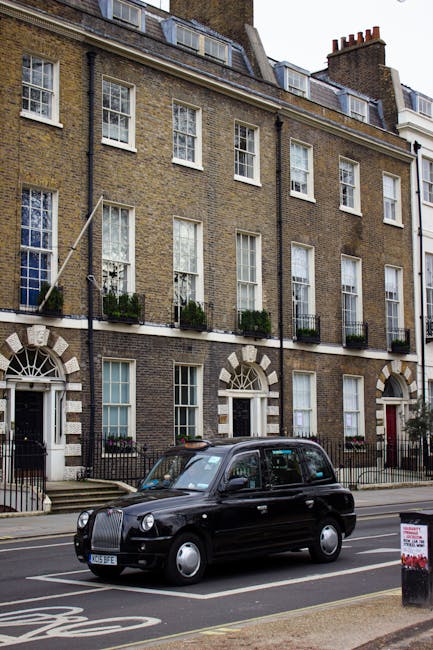
Dalston Removals for Narrow Streets and Staircases: A Practical Local Guide
Moving in Dalston can be a breeze or a bit of a puzzle, and the difference usually comes down to access. Tight terraces, busy side roads, parked cars, awkward corners, and those steep staircase runs in older flats all change how a move needs to be handled. If you are planning Dalston removals for narrow streets and staircases, the job is less about brute force and more about smart planning, the right vehicle, and calm coordination.
That might sound obvious, but in real life it is where many moves go sideways. A sofa that looked fine in the hallway suddenly becomes a three-person problem. A van that seemed "small enough" ends up blocking the road. A box carried one-handed down a winding stairwell becomes a wobble waiting to happen. The good news? With the right approach, these local challenges are manageable. In this guide, you will find clear, practical advice on how to plan, what to ask for, what to avoid, and how to get moving day under control without the stress spiral.
If you are comparing services, it can also help to look at the wider support available, from general removals in Hackney E5 to man and van help in Hackney, or even storage options in Hackney E5 if you need a little breathing room between moves.
Table of Contents
- Why Dalston removals for narrow streets and staircases Matters
- How Dalston removals for narrow streets and staircases Works
- Key Benefits and Practical Advantages
- Who This Is For and When It Makes Sense
- Step-by-Step Guidance
- Expert Tips for Better Results
- Common Mistakes to Avoid
- Tools, Resources and Recommendations
- Law, Compliance, Standards, or Best Practice
- Options, Methods, or Comparison Table
- Case Study or Real-World Example
- Practical Checklist
- Conclusion
- Frequently Asked Questions
Why Dalston removals for narrow streets and staircases Matters
Dalston has a character of its own. That is part of the appeal. But the same things that make it lively also make moving more complicated: older buildings, compact streets, mixed-use roads, and entrances that were not exactly designed with king-size mattresses in mind. When access is tight, every part of the move needs to be thought through before the first box is lifted.
This matters for three reasons. First, safety. Carrying furniture through tight turns or up steep stairs increases the chance of knocks, slips, and injuries. Second, time. What should be a straightforward collection can run long if the route in and out has not been checked properly. Third, cost control. Poor planning often means extra labour, more trips, or avoidable delays. Truth be told, that is where a "cheap move" can become expensive pretty quickly.
It also matters because local moving needs are not all the same. A top-floor flat above a shop is very different from a ground-floor maisonette with a rear entrance. A small office in Dalston Junction has different access needs again. That is why specialist removal planning is so useful. If you want a broader service package, removal services in Hackney E5 can cover the moving pieces that make the whole process work together.
Expert summary: In Dalston, the best move is usually the one that is planned around access, not the one that simply has the biggest van or the fastest pace. Narrow streets and staircases reward preparation, careful lifting, and realistic timings.
How Dalston removals for narrow streets and staircases Works
At a practical level, the process is about matching the move to the property. That means understanding the width of the street, the parking conditions, the number of floors, the shape of the staircase, and the size of the items being moved. A team that works well in Dalston will often ask detailed questions before moving day, because those details affect everything from van choice to loading order.
Here is how it usually works when done properly:
- Access is checked first. The mover asks about stair counts, tight landings, door widths, and whether large items can be turned safely.
- The vehicle is matched to the route. A compact removal van in Hackney E5 can be far more useful than a larger vehicle if streets are cramped or parking is limited.
- The loading plan is set. Heavy items go in first, fragile items are separated, and long pieces are positioned so they can be unloaded in a sensible order.
- Protective packing is used. Blankets, straps, wraps, and covers reduce damage in stairwells and during repeated lifting.
- The route is kept clear. Good teams will think about where boxes are staged, how doorways are protected, and whether anything needs temporary storage.
For flats with awkward access, there is often a simple reality: the move is easier when fewer unnecessary trips are made. That means consolidating items, labelling well, and not treating the staircase like a storage area. One box on a landing is fine; six boxes, a lamp, and a bag of cables? Now it is just a trip hazard with opinions.
Sometimes the right option is a smaller, more flexible service. That is where man with van support in Hackney E5 or a more agile man and van service in Hackney can make a real difference, especially for one-bedroom moves or partial loads.
Key Benefits and Practical Advantages
Specialist handling for narrow streets and staircases is not just about convenience. Done properly, it changes the whole moving day experience.
1. Less damage to belongings and property
Turning corners on stairs with a wardrobe or carrying a dining table through a slim hallway is where chips and scuffs happen. Careful planning reduces that risk. Wall protection, furniture blankets, and measured lifting help keep both your belongings and the building in better shape.
2. Faster, cleaner movement through the building
When the route is mapped out before the van arrives, the team can move in a smooth sequence instead of stopping to rethink every doorway. That matters in Dalston, where roads can be busy and neighbours do not always love a blocked pavement. Fair enough, no one does.
3. Better use of smaller vehicles
In tight local streets, a compact vehicle can be a smart choice. It may mean more careful loading, but it also means better access, easier parking, and fewer awkward manoeuvres. If you are weighing your options, a dedicated removal company in Hackney E5 should explain why one vehicle setup suits your property better than another.
4. Less stress for you
Let's face it, moving already carries enough pressure. Once you start worrying about whether a sofa will fit on the staircase, the whole day can feel heavier. A process built around access helps you stay calmer, and that counts for a lot.
5. More realistic planning for timing and labour
Some moves look simple on paper but take longer because the layout is awkward. With the right plan, timings are more accurate from the start. That means fewer surprises and a smoother handover at both ends.
Who This Is For and When It Makes Sense
This kind of service makes sense for anyone moving in or out of a property where access is not straightforward. In Dalston, that can include basement flats, top-floor apartments, converted houses, live-work spaces, offices above retail units, and older buildings with narrow internal staircases.
It is particularly useful if you have:
- large furniture that must be carried by hand
- a staircase with bends, tight landings, or awkward turns
- limited roadside parking near the property
- heavy or fragile items that need a steady, careful lift
- a move that needs to fit around neighbours, loading restrictions, or a busy street
It also makes sense if you are handling a mixed move, such as boxes and office equipment, or if you want to split the move into stages. A lot of people use house removals in Hackney E5 for fuller domestic moves, while others need a more flexible setup for a smaller flat or a single-room move.
There is also a practical side to timing. If you are moving after a tenancy end date, or between work commitments, access problems can quickly become deadline problems. That is the point where experienced help really earns its keep.
Step-by-Step Guidance
Here is a clear, sensible way to approach a Dalston move when the street is narrow and the staircase is awkward. Not glamorous. Just effective.
Step 1: Walk the route, not just the room
Stand outside the property and look at the road. Where will the van stop? Is there room to open the doors safely? Can a sofa turn at the front door without scraping the frame? Then do the same inside. The trick is to spot the difficult bit before the difficult bit spots you.
Step 2: Measure the bulky items
Measure the height, width, and depth of anything oversized: wardrobes, bed frames, bookcases, mirrors, and white goods. Compare those dimensions with stair width, landings, and door openings. You do not need an engineering degree. You just need a tape measure and a little patience.
Step 3: Decide what should be dismantled
Some furniture is better taken apart. Bed frames, tables, modular shelves, and some desks can often be broken down into safer, smaller pieces. Keep fixings in labelled bags and tape them to the relevant item or place them in a clearly marked box.
Step 4: Pack for carrying, not just for storage
Boxes should be firm, evenly filled, and not overpacked. Heavy items belong in smaller boxes. Fragile items need cushioning, but not so much loose space that everything moves around. If you are unsure, a slightly smaller box is usually better than an ambitious one. Your back will thank you.
Step 5: Prepare the building
Protect floors where needed, clear the route, and make sure doors can be opened fully. If you live in a shared building, give neighbours a bit of notice. That small bit of courtesy can save a lot of awkwardness on the day.
Step 6: Load in the right order
Heavy and stable items usually go in first, with fragile items secured separately. The aim is not just to fit everything in. The aim is to unload efficiently too, especially when you are dealing with narrow streets and a staircase at the destination.
Step 7: Keep a final essentials bag with you
Keys, chargers, tea bags, documents, medication, snacks, and toilet essentials. These are the things people forget most often, and they always become important at the worst possible moment. One small bag can save half an hour of searching.
Expert Tips for Better Results
A few practical habits make a much bigger difference than people expect.
- Book a realistic arrival window. Dalston traffic and parking can be unpredictable, so build in a little slack.
- Use colour labels on boxes. Bedrooms, kitchen, office, and fragile items become easier to identify quickly.
- Keep stairwells clear. A clean route is safer and faster, especially in older buildings.
- Pack by room and by priority. What you need first should be easiest to reach at the destination.
- Pre-light dark staircases. Basements and top-floor flats can be dim in the late afternoon, and poor lighting slows everything down.
- Ask in advance about access quirks. Intercoms, coded doors, shared corridors, and narrow rear entrances can all affect the job.
One small but useful tip: if you have a staircase with a tight corner, photograph it. A couple of phone pictures can be surprisingly helpful when explaining the layout to a mover. Sounds simple, but it works.
If you are still comparing options, it can help to think beyond the job title and look at the support model. For example, some customers prefer the simplicity of local removals in Hackney, while others want a more tailored move with packing, loading, and access support all handled together.
Common Mistakes to Avoid
Most moving headaches are preventable. The same mistakes show up again and again, and honestly, they are easy to avoid once you know them.
Underestimating staircase difficulty
A staircase that looks manageable from the bottom can be much trickier once you are carrying a mattress or a chest of drawers. Always think about turning space, grip, and visibility, not just the number of steps.
Choosing a vehicle that is too large for the street
In narrow Dalston roads, a bigger van is not always better. If the vehicle struggles to park or block-free loading becomes impossible, the move slows down immediately. Sometimes smaller really is smarter.
Packing heavy boxes too full
This is a classic mistake. A box packed with books, dishes, and "just one more thing" can become unsafe very quickly. Use smaller boxes for heavy items and leave room for safe handling.
Forgetting building rules or shared access needs
Communal buildings may have practical expectations around entry, lift use, loading times, or noise. You do not want to discover those on moving day. Check early, be polite, and keep everyone informed.
Not separating fragile or awkward items
Mirrors, TVs, lamps, and flat-packed panels often need special handling. If they get bundled in with everything else, they are harder to protect and slower to move.
Leaving packing until the final evening
That last-night rush is usually where mistakes multiply. People tape boxes badly, mislabel rooms, and forget essentials. An early start makes the whole thing feel lighter, even if it is only by a bit.
Tools, Resources and Recommendations
You do not need a warehouse full of gear, but a few simple tools make awkward access moves much easier.
| Tool or item | Why it helps | Best use case |
|---|---|---|
| Furniture blankets | Protects wood, paintwork, and corners | Staircases, narrow door frames, long carries |
| Ratchet or cargo straps | Secures items during transit | Large furniture, white goods, stacked loads |
| Dolley or trolley | Reduces lifting strain where suitable | Ground-floor runs, smooth surfaces, heavier boxes |
| Door protectors | Helps prevent chips and scuffs | Shared hallways, tight entrances, repeated trips |
| Labels and markers | Makes unloading faster and tidier | Any move with multiple rooms or mixed items |
For people who need a bit more flexibility, a small-scale move can sometimes be combined with temporary storage. That is especially handy if one property is not ready yet or if a staircase issue means some items need to be moved later. In those cases, storage in Hackney E5 can be part of the solution rather than an afterthought.
It is also worth thinking about the kind of move you actually need. Not every job needs the same setup. A single-room move, a flat move, and an office move each have different rhythms. If your move includes work equipment or a home office setup, office removals in Hackney E5 may be the better fit.
Law, Compliance, Standards, or Best Practice
For most home moves, the main compliance concerns are practical rather than legal drama. You want to avoid damage, protect people, and respect shared spaces. In the UK, removal work is expected to follow sensible manual handling and safety practice, especially where heavy lifting, stairs, or awkward routes are involved.
That means movers should think carefully about load weight, route planning, safe carrying methods, and whether something should be dismantled instead of forced through. If a property has communal access, there may also be building rules, management requirements, or local loading considerations to keep in mind. None of that is glamorous, but it matters.
Best practice also includes honest communication. If an item is too large for the stairwell, say so early. If access is likely to be tight, plan for extra time. If a vehicle needs to stop a little farther away, that should be factored in rather than discovered with the back doors already open.
And, because this is the sort of thing people often overlook, having clear contact and job details is part of good moving practice too. If you need a quote or want to ask about access, use the company's contact page and give as much detail as you can. That simple step often prevents avoidable confusion later.
Options, Methods, or Comparison Table
Different moving methods suit different properties. If your route is tricky, the wrong choice can make everything feel harder than it needs to be.
| Method | Best for | Strengths | Limitations |
|---|---|---|---|
| Full-service removals | Larger household moves, multiple heavy items | More hands, better coordination, fuller support | Can be more than you need for a very small move |
| Man and van | Flats, smaller loads, flexible access | Agile, practical, often ideal for narrow streets | May require more self-packing and preparation |
| Removal van only | Customers who can load with help or have staged packing | Good control over timing and transport | Less hands-on support for carrying and lifting |
| Storage plus move | Delays between move-out and move-in | Reduces pressure, useful for staggered handovers | Extra planning needed, and a bit more admin |
For many Dalston homes, the sweet spot is a flexible service that can handle access challenges without overcomplicating the day. That is why people often compare man with van help against broader removal services before deciding what fits best.
Case Study or Real-World Example
Imagine a typical Dalston move: a two-bedroom flat on an upper floor, a staircase with a bend halfway up, and a street where parking is tight by midday. The customer has a wardrobe, a bed frame, a sofa, several boxes of books, and a mirror that is definitely too nice to risk being wedged under the stairs. You know the type. Great flat, awkward lift-in route. No lift, of course. Because that would have been too easy.
The sensible plan starts with measuring the wardrobe and checking whether it can be dismantled. The sofa is assessed for turning space. Boxes of books are repacked into smaller loads so they are easier to carry. The van is booked with enough room for the job, but not so large that it becomes a parking problem. Fragile items are wrapped separately, and the stairwell is kept clear while items are moved one by one.
What changes the outcome most is not speed, but sequence. The team works from the most awkward item to the easiest, rather than leaving the difficult pieces for last when everyone is tired. The result is a move that feels controlled instead of chaotic. Not perfect, maybe. But a whole lot better than forcing a sofa round a corner at a bad angle while someone mutters "it should fit" for the fifth time.
That same approach works for small offices too, especially if the building has narrow internal stairs and a limited loading bay. It is the planning that does the heavy lifting before the actual lifting begins.
Practical Checklist
Use this before moving day. It keeps the details from slipping through the cracks.
- Measure large furniture and compare it with doors, hallways, and stairs
- Check whether any items need dismantling
- Confirm parking or loading access near both properties
- Label boxes clearly by room and priority
- Pack heavy items in smaller boxes
- Keep fragile items separate and well protected
- Clear stairwells, landings, and entrance paths
- Notify neighbours if access may be busy or noisy
- Prepare an essentials bag for the first 24 hours
- Tell the mover about any tight corners, coded doors, or other access quirks
- Have a backup plan if one item cannot safely go through the staircase
Quick takeaway: if you plan for the stairs, the street, and the van together, the move becomes much more predictable. That is the whole game really.
Conclusion
Dalston moving jobs do not have to be stressful, even when the streets are narrow and the staircase looks like it was designed by someone with a grudge. The key is simple: plan for access early, choose the right moving method, protect your belongings properly, and keep the route clear and realistic.
Whether you are moving a flat, a family home, or a small office, the best results usually come from calm preparation rather than rushed lifting. If you are still deciding how to structure your move, a local service can help you match the job to the property instead of forcing the property to fit the job. Small difference, big impact.
If you are also getting to know the area better while planning your move, you might enjoy reading about Hackney as a living destination or exploring the wider local feel in this guide to Hackney's modern vibe. And if you are moving into a space that needs a fresh start, that part can actually feel exciting. A bit daunting, yes. But exciting too.
Get a free quote today and see how much you can save.
Sometimes the smoothest move is the one that respects the quirks of the building, the street, and your own energy on the day. That's what good local moving is all about.
Frequently Asked Questions
What makes Dalston removals for narrow streets and staircases different from a standard move?
The main difference is access. Narrow roads, restricted parking, and stairs with turns or tight landings require more planning, more careful lifting, and often a better-matched vehicle. The move needs to suit the building, not just the address.
Should I choose a smaller van for a narrow Dalston street?
Often, yes. A smaller or more flexible van can be easier to park, unload, and position safely near the property. The best choice depends on the size of the load, but a compact vehicle is frequently the smarter option in tight streets.
Can large furniture be moved up narrow staircases?
Sometimes, but it depends on the item and the staircase shape. Sofas, wardrobes, and bed frames may need dismantling, turning, or extra manpower. If an item cannot be moved safely, it is better to adapt the plan than force it.
How do I know if my staircase is too tight for furniture?
Measure the stair width, landing space, and door openings, then compare them with the item dimensions. If the furniture is longer than the landing turn or too wide to rotate safely, it may need to be dismantled or moved another way.
Do I need to dismantle my bed or wardrobe before the move?
In many cases, yes. Flat-pack furniture and modular pieces are usually easier to handle if taken apart. It also lowers the chance of scuffs and makes stair movement much safer.
How far in advance should I book a move in Dalston?
As early as you can, especially if your move needs careful access planning. Busy periods, weekend slots, and properties with tricky staircases can fill up quickly, so booking ahead usually gives you more choice and less pressure.
What should I tell the removals team before moving day?
Share the full access picture: stair count, tight corners, parking restrictions, item sizes, floor level, and any coded entry or loading details. The more accurate the information, the better the plan.
Can storage help if my new place is not ready yet?
Yes. Temporary storage can be very useful if there is a gap between move-out and move-in, or if some items need to be delivered later because access is awkward. It can make the whole move feel a lot less rushed.
Are there special rules for moving in shared buildings?
Usually there are practical expectations rather than strict rules written in stone. Common sense, courtesy, and clear communication matter most. Check whether there are building access procedures, shared hallway considerations, or preferred loading times.
How can I reduce the risk of damage during a staircase move?
Use protective wrapping, clear the route, pack boxes properly, dismantle bulky items where possible, and avoid carrying more than is safe. Slow is often better than rushed when stairs and corners are involved.
Is a man and van service enough for a flat move in Dalston?
It often is, especially for smaller flats or lighter loads. A man and van service can be an efficient choice when access is tight and you want something flexible rather than a large, fixed setup.
What happens if a sofa will not fit through the stairwell?
The usual options are to dismantle it if possible, use an alternative route if available, or move it into storage until a safer solution is arranged. Forcing it through is rarely worth the risk.